Junior Detective Badge Requirements PDF Overview
This 9-page booklet outlines the Junior Detective Badge requirements, featuring activities like decoding ciphers, fingerprint analysis, and observation skills. Its comprehensive content, including a link to a Leaders Guide for additional resources, ensures troops can fully meet all badge criteria effectively;
The Junior Detective Badge offers an incredibly exciting and enriching opportunity for young participants, especially within programs like the Girl Scouts, to delve deep into the fascinating world of investigative work. This meticulously designed program aims to introduce aspiring sleuths to fundamental investigative skills, significantly fostering their curiosity, critical thinking, and problem-solving abilities. By embracing the unique challenge of earning this esteemed badge, juniors embark on an engaging journey of discovery, learning to observe their surroundings with keen attention and analyze clues with the precision of real professionals. The entire experience is thoughtfully crafted to be both highly educational and immensely fun, ensuring that troops enjoy a memorable and exceptionally productive meeting. It comprehensively equips them with valuable new knowledge and practical abilities, culminating in a profound sense of accomplishment. This badge is far more than just an award; it represents a tangible testament to their newfound understanding of how detectives approach complex mysteries, actively encouraging hands-on participation and a proactive approach to solving intriguing puzzles. It serves as a fantastic keepsake, proudly showcasing the valuable lessons learned and the badge honorably earned, making the entire process a truly rewarding adventure.
Purpose of the Junior Detective Badge
The purpose of the Junior Detective Badge is multifaceted, primarily aimed at sparking curiosity and developing essential investigative skills in young participants. It seeks to engage and educate through hands-on activities, providing a fun and interactive pathway into the world of detective work. By learning to decode ciphers, analyze fingerprints, sharpen observation, and interpret clues like shoe prints and color secret codes, juniors build foundational knowledge crucial for problem-solving. This program is designed to deliver a fulfilling and memorable experience for every troop, culminating in the earning of a prestigious badge and a tangible sense of accomplishment. Furthermore, it serves to equip participants with an analytical mindset, fostering a deeper understanding of how mysteries are solved. The badge acts as a cherished keepsake, reflecting the valuable knowledge gained and the exciting journey undertaken. For leaders, the badge booklet’s clear structure simplifies planning, ensuring a productive meeting with minimal heavy lifting, thus maximizing the overall educational and enjoyable impact for everyone involved.

Core Activities for Earning the Badge
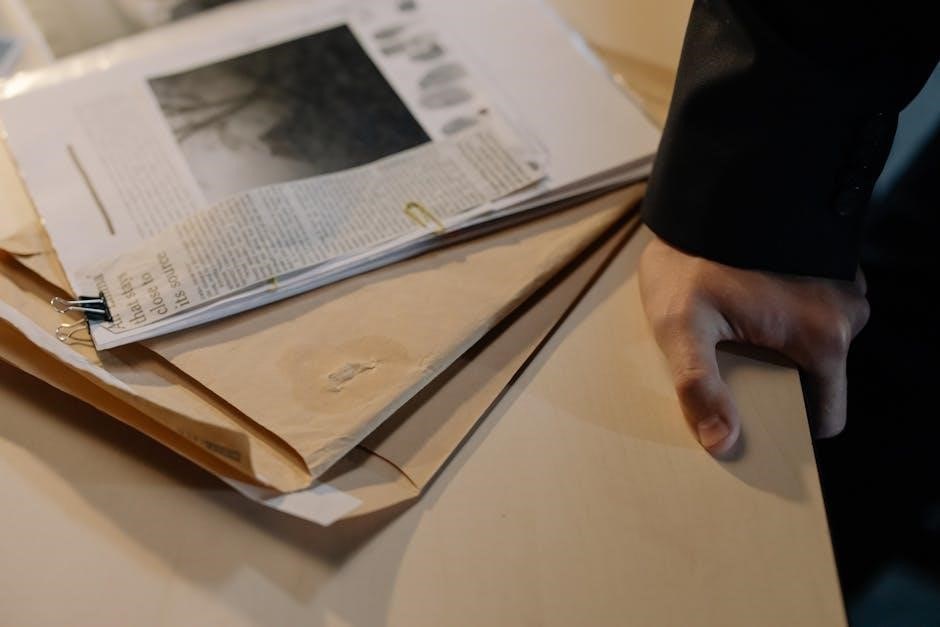
Core activities for the Junior Detective Badge include decoding ciphers, learning about fingerprints, sharpening observation skills, investigating shoe prints, understanding color secret codes, crafting Morse code necklaces, and exploring basic DNA extraction principles.

Decoding Messages Using Ciphers
Decoding messages using ciphers is a cornerstone activity for aspiring junior detectives, introducing them to the exciting world of secret communication. This hands-on experience teaches participants how to transform cryptic symbols or rearranged letters into understandable text, much like real-life investigators uncover hidden clues. Junior detectives engage with various types of ciphers, such as substitution ciphers where one letter stands for another, or transposition ciphers where letters are merely shuffled. This activity not only hones their problem-solving abilities but also encourages critical thinking and pattern recognition; By working through these puzzles, children develop a keen eye for detail and an understanding of logical sequences. The thrill of successfully deciphering a coded message provides a significant sense of accomplishment, reinforcing their dedication to the detective path. This fundamental skill is essential for piecing together information and solving mysteries, preparing them for more complex investigative challenges ahead. It’s a playful yet educational way to grasp the principles of cryptography, making the journey to earning the Junior Detective Badge both engaging and intellectually stimulating. Participants learn that sometimes, the most obvious answer is hidden in plain sight, requiring only the right key or method to unlock its secrets. This empowers them with tools to look beyond the surface, a crucial trait for any budding detective.
Learning About Fingerprints
Learning about fingerprints is a fundamental and thrilling activity for aspiring junior detectives, directly fulfilling a core requirement for their badge. This engaging exploration introduces participants to the unique patterns on their fingertips, emphasizing how no two individuals, not even identical twins, share the exact same prints. Detectives utilize this scientific fact for identification and solving mysteries. Junior detectives will engage in practical exercises, learning how to carefully collect and analyze fingerprints, much like forensic experts. This often involves dusting for latent prints with special powders and then lifting them using adhesive tape, revealing the intricate details of loops, arches, and whorls. The activity fosters meticulous observation skills and an understanding of basic forensic science. By understanding the principles behind fingerprint analysis, children grasp the importance of evidence collection and preservation at a crime scene. This hands-on experience not only makes the concept of detection tangible but also instills a sense of responsibility and attention to detail. It’s a captivating step towards earning the badge, providing them with a concrete skill essential to any investigator’s toolkit and showcasing the power of unique biological markers in solving puzzles, a truly invaluable lesson for any young sleuth.
Utilizing the Power of Observation
Utilizing the power of observation is a cornerstone activity for earning the Junior Detective Badge, emphasizing the crucial skill of noticing subtle details often overlooked by others. This essential detective trait involves active engagement with one’s surroundings, training the eye to register clues, changes, and anomalies. Junior detectives will participate in exercises designed to sharpen their perceptive abilities, such as memory games where they observe a scene or a collection of objects for a short period, then recall as many details as possible. They might be challenged to spot differences between two seemingly identical images or to describe a person or environment after a brief encounter. This rigorous training helps them understand how to gather visual evidence, interpret body language, and piece together narratives from fragmented information. By honing these observational skills, young participants learn to become more attentive and analytical, crucial for any investigative work. The ability to observe meticulously is vital for solving mysteries, identifying suspects, and understanding motives, making it a foundational element of their detective training and a key requirement for successfully earning their badge.
Investigating Shoe Prints

Investigating shoe prints stands as a vital activity for earning the Junior Detective Badge, immersing participants in the forensic art of tracking and identification. This hands-on experience teaches young sleuths how to analyze the subtle yet telling clues left behind by footwear. Junior detectives learn that shoe prints are not just simple marks; they can reveal crucial information about a suspect, including their shoe size, brand, unique wear patterns, and even their gait. Activities typically involve examining various shoe prints, identifying different sole patterns, and understanding how these patterns can be used to narrow down possibilities. Participants might engage in making plaster casts of footprints, comparing known shoe patterns to unknown prints found at simulated crime scenes, or discussing how environmental factors like mud or dust affect print clarity. This exercise hones their analytical skills, attention to detail, and ability to connect visual evidence to a larger narrative, much like real-world detectives. By mastering the art of shoe print investigation, junior detectives gain a deeper appreciation for forensic science and the meticulous work required to solve mysteries, directly fulfilling a key requirement for their badge.
Understanding Color Secret Codes
Understanding Color Secret Codes is an engaging and creative activity for junior detectives, central to earning their badge. This task introduces them to the fascinating concept that colors can carry hidden messages and serve as a subtle form of communication or clues in an investigation. Unlike traditional ciphers that rely on letters or numbers, color codes utilize the visual spectrum to convey information, requiring a different kind of observational skill. Junior detectives learn to assign specific meanings to various colors or combinations of colors, understanding that context is crucial. For instance, a red object might signify danger, blue for safety, or a sequence of colored items could spell out a secret message. This involves not only decoding pre-set color codes but also the exciting challenge of creating their own, fostering imaginative thinking and strategic planning. Participants might be given a scenario where they need to decipher a series of colored markers left as clues, or they could design a color-coded system to transmit information without a suspect’s knowledge. This activity significantly enhances their ability to pay close attention to visual details and think outside the box when approaching mysteries, reinforcing the power of observation. By mastering the art of color secret codes, young sleuths develop a critical eye for subtle indicators that might otherwise be overlooked, proving invaluable for any aspiring detective;
Crafting Morse Code Necklaces
Crafting Morse Code Necklaces is a core activity for the Junior Detective Badge, imparting essential secret communication skills. This project translates letters into Morse code’s dot and dash patterns. Participants use varied beads—short for dots, long for dashes, with spacers—to design personalized necklaces. These items convey secret messages, initials, or clues, fostering discreet communication.

This task offers a practical lesson in encoding and decoding. Detectives learn the Morse code alphabet, sharpening memory and detail. Precise bead stringing teaches accuracy; errors distort messages. The activity emphasizes systematic approaches and a ‘key’ for decryption, reflecting real investigative work. The necklace symbolizes clandestine communication, reinforcing discreet information sharing. This engaging, educational endeavor is crucial for developing a true junior detective’s resourcefulness and investigative mindset, fulfilling badge requirements.
Basic DNA Extraction Concepts
Understanding basic DNA extraction concepts is a vital, engaging activity for earning the Junior Detective Badge. While not involving complex laboratory equipment, junior detectives can learn the foundational principles of DNA’s role in forensic science through simple, hands-on experiments. The objective is to demonstrate that DNA, the genetic blueprint of life, is present in all living cells and can be visibly extracted.
Typically, this involves a safe, accessible process, such as extracting DNA from common fruits like strawberries or bananas. Participants learn to mash the fruit to break down cell walls, then add a solution containing soap to dissolve cell membranes and salt to neutralize DNA’s charge, allowing it to clump together. Finally, cold rubbing alcohol is used to precipitate the DNA, making it visible as a cloudy, stringy substance. This tangible experience teaches the importance of biological evidence in investigations and introduces the concept that DNA holds crucial information for solving mysteries, fostering an early appreciation for scientific methods in detective work.

The Junior Detective Badge Booklet
This 9-page booklet, designed for engagement and education, outlines activities like decoding ciphers and learning about fingerprints. It ensures fulfillment of all Junior Detective Badge requirements. Additionally, it provides a link to a comprehensive Leaders Guide with further resources at its conclusion.
Booklet Page Count and Engagement
The Junior Detective Badge booklet is meticulously structured with 9 pages, each specifically designed to engage and educate participants effectively. This precise page count is crucial, offering a balanced and comprehensive experience without overwhelming young minds. The content within these pages is paramount to fostering deep engagement. For example, the booklet features stimulating activities like decoding messages using ciphers, which immediately captivates curiosity and sharpens critical thinking skills. Learning about fingerprints introduces a compelling, hands-on scientific dimension to detective work, transforming the learning process into an interactive and memorable adventure. Moreover, the strong emphasis on utilizing the power of observation is vital, encouraging participants to develop keen attention to detail—an indispensable attribute for any aspiring detective. These thoughtfully selected activities, distributed across the 9 pages, are strategically organized to deliver a truly fun and engaging experience for every troop, ensuring valuable knowledge acquisition and a profound sense of accomplishment.
Fulfilling Badge Requirements with the Booklet
This comprehensive booklet, when implemented in its entirety, is expertly designed to fulfill all the necessary requirements for earning the Junior Detective Badge. It streamlines the learning process, effectively doing most of the “heavy lifting” for leaders, thereby granting them more free time and a clear agenda for productive meetings. The booklet meticulously guides participants through key detective activities crucial for badge completion. These include practical exercises such as learning about fingerprints, investigating shoe prints, understanding color secret codes, crafting Morse code necklaces, and even exploring basic DNA extraction concepts. Crucially, earning the badge necessitates active participation in these hands-on steps, rather than mere observation. By engaging directly with each activity presented within its pages, troops gain the essential knowledge and practical skills required. This structured approach ensures a thorough, engaging, and successful pathway to achieving the Junior Detective Badge, leaving participants with a valuable keepsake and a profound sense of accomplishment.
Link to the Leaders Guide
At the conclusion of each Junior Detective Badge booklet, a crucial and invaluable link is provided, directing leaders to a comprehensive Leaders Guide. This guide serves as an essential supplementary resource, meticulously designed to further empower and support troop leaders in facilitating an exceptional learning experience. It contains a wealth of additional information, expanding upon the various detective topics and activities introduced within the main booklet. For instance, while the booklet outlines how to decode messages or understand fingerprints, the Leaders Guide might offer deeper scientific explanations, historical context, or alternative methods to engage participants effectively. This ensures leaders are well-equipped to answer advanced questions, provide richer context, and adapt activities to suit their troop’s specific needs and interests. It’s an indispensable tool for enhancing discussions, clarifying complex concepts, and ensuring every aspect of the badge requirements is covered with depth and enthusiasm. This dedicated resource significantly aids volunteers in transforming each meeting into a truly enriching and educational adventure, bolstering their confidence and expertise, thereby ensuring a consistent and exceptionally high-quality program delivery for all participants.

Earning the Junior Detective Badge
To earn the Junior Detective Badge, active participation in all specified activities is crucial. You must fully engage, not just observe, as Detective Victoria guides you through each essential step to successfully fulfill the badge requirements.
Active Participation Requirement

Earning the Junior Detective Badge rigorously demands active, hands-on participation, moving beyond mere observation. To truly meet the badge requirements, every participant must diligently complete each specified step, translating theoretical knowledge into practical skills. This direct involvement is critical for fostering a deep understanding and mastering essential detective techniques, preparing young minds for investigative thinking. The explicit instruction is clear: “Dont just watch! you need to participate to earn the badge!” Key activities, such as Fingerprinting, Shoe Prints, Color (Secret) Codes, Morse Code Necklaces, and DNA extraction, are central. These core tasks, detailed within the badge booklet, are specifically designed for immersive and engaging experiences. Detective Victoria, or a designated leader, guides participants through these initial steps, providing necessary context and encouragement, ensuring a genuinely fun and educational journey. The emphasis is firmly on doing, enabling individuals to develop crucial observational prowess, problem-solving abilities, and meticulous attention to detail. Only through such dedicated, active engagement can the requisite knowledge be truly acquired and the Junior Detective Badge successfully earned, providing a valuable keepsake to share with family and celebrating the practical skills gained for life.
Guided Steps by Detective Victoria
Detective Victoria plays a pivotal role in guiding participants through the initial and crucial stages of earning the Junior Detective Badge. Her structured approach ensures that every aspiring junior detective actively engages with the required skills and concepts from the very beginning. She leads the participants through a series of hands-on activities, transforming the learning process into an exciting investigative journey. Specifically, under her guidance, young detectives delve into core practices such as Fingerprinting, where they learn the nuances of identifying unique patterns. They also investigate Shoe Prints, understanding how to analyze tracks for valuable clues. Detective Victoria further instructs on deciphering Color (Secret) Codes, enhancing problem-solving abilities, and guides the crafting of Morse Code Necklaces, introducing foundational communication methods. Additionally, she facilitates an introduction to DNA extraction, providing a basic understanding of forensic science concepts. Her expert instruction ensures that these initial steps are not only informative but also highly interactive, providing a solid foundation for mastering the comprehensive badge requirements. This guided pathway fosters a sense of accomplishment and deepens the understanding of what it truly means to be a detective, ensuring a memorable and educational experience for all.
Support and Resources for Leaders
A comprehensive Leaders Guide offers additional resources to expand on topics during meetings. It includes volunteer recommendations, suggesting three volunteers for optimal station management, ensuring smooth and engaging activities for junior detectives to earn their badge.
Leaders Guide Additional Resources
The comprehensive Leaders Guide serves as an invaluable companion, specifically designed to enrich the Junior Detective Badge experience. Accessible via a direct link at the culmination of each junior detective booklet, this guide provides extensive supplementary materials crucial for leaders to effectively facilitate all badge requirements. It goes beyond merely outlining the steps, offering deeper insights and practical advice to expand upon diverse topics covered during the meeting. For instance, while the booklet introduces decoding ciphers and fingerprint analysis, the Leaders Guide might furnish various cipher examples, detailed instructions for creating fingerprint kits using household items, or advanced discussion prompts to enhance critical thinking. It aims to empower leaders with the tools to transform each activity—from investigating shoe prints to understanding color secret codes and crafting Morse code necklaces—into a more profound and memorable learning opportunity. Furthermore, for concepts like basic DNA extraction, the guide could offer simplified scientific explanations suitable for junior levels, ensuring leaders feel confident in explaining complex ideas. This additional support helps leaders manage the flow of activities efficiently, ensuring a productive and engaging session that fully meets the badge’s educational objectives, ultimately simplifying the preparation process and maximizing the fun for every participant.
Volunteer Recommendations for Stations
It is highly recommended to engage at least three volunteers to effectively manage the Junior Detective Badge activities. This optimal number allows volunteers to fluidly move between various stations, offering personalized guidance and further elaborating on the detective skills being developed. For instance, with dedicated stations for fingerprinting, investigating shoe prints, deciphering color secret codes, crafting Morse code necklaces, and exploring basic DNA extraction concepts, each volunteer can focus on a few specific areas. This distributed support ensures every participant receives adequate attention and understands the practical application of each detective technique. One volunteer might oversee hands-on activities like fingerprint lifting, demonstrating proper techniques. Another could guide logical puzzles such as color codes and Morse code, encouraging critical thinking and problem-solving. The third volunteer could facilitate discussions on observation skills and the basics of DNA extraction, connecting theory to real-world detective work. This well-supported, station-based approach guarantees a dynamic and highly engaging experience where girls actively participate and gain a deeper appreciation for a detective’s multifaceted role, leading to a successful badge earning journey.